Resources
Frequently Asked Questions
This page answers the most common questions homeowners ask about water, mold and fire damage restoration, insurance claims, our process and our Las Vegas service area. If your question is not answered here, call us 24/7 and our team will walk through your specific situation with you.
Water Damage
Water damage questions usually come down to timing and scope, how fast we can respond, and what can realistically be dried versus what needs to be replaced. The questions below cover the basics of our water damage response.
Mold
Mold questions often follow water damage, since the two are closely connected. These answers cover how we approach mold remediation and what to expect during that process.
Fire and Smoke Damage
Fire damage restoration involves more than the visible burn area, since smoke and soot can spread throughout a home. These answers cover what our fire damage process generally includes.
Insurance
Insurance is one of the most common topics homeowners ask about. These answers give general guidance, but your specific policy always governs your specific claim.
Our Process
These questions cover what to expect once you call us, from the free inspection through the completed job.
Service Area and Company
These answers cover where we work, who we work with, and the basics of our company.
Questions
Straight answers
What counts as a water damage emergency?
Any active leak, burst pipe, appliance failure or storm intrusion that is putting water into your home counts as an emergency worth calling about right away. Even a smaller leak is worth addressing quickly, since mold can begin growing within 24 to 48 hours of water exposure.
How fast do you respond to water damage calls?
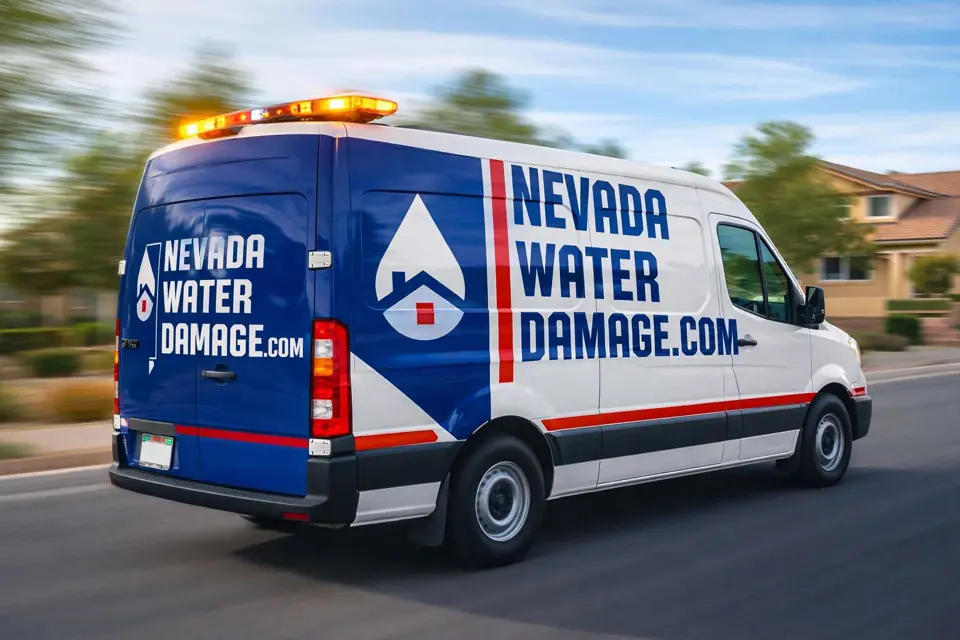
We take calls 24 hours a day, 7 days a week, and typically arrive in about an hour across most of the Las Vegas valley, depending on your location and conditions. We never promise an exact arrival time, but we treat every water call as time-sensitive.
Can wet carpet or flooring be saved?
It depends on the material, the water category and how long it sat. Solid surfaces like tile can often be dried and saved, while carpet padding and some laminate or engineered wood may need to be removed, which we assess room by room during the inspection.
How long does structural drying take?
Most jobs take about three to five days of structural drying with air movers and dehumidifiers, confirmed by daily moisture readings rather than guesswork. The exact time depends on the materials involved and how much moisture needs to come out.
How quickly can mold grow after water damage?
The U.S. EPA notes that mold can begin to grow within 24 to 48 hours of water exposure, which is why addressing water damage quickly matters even when it looks minor at first.
Do you use eco-friendly products for mold remediation?
Yes, we use eco-friendly, organic products for mold remediation, applied as part of a process that follows the IICRC S520 mold remediation standard.
Is mold testing included with remediation?
We assess visible mold and moisture conditions as part of our inspection and remediation process. For specific air quality or clearance testing questions, ask our team during your inspection, since testing needs vary by situation.
Can I stay in my home during mold remediation?
In many residential jobs you can remain in the home, though contained areas undergoing active remediation are typically sealed off from the rest of the house. We will explain what makes sense for your specific situation before work begins.
What does fire damage restoration include?
Fire damage restoration typically includes cleaning smoke and soot from surfaces, addressing odor, removing and rebuilding materials that were burned or heat-damaged, and coordinating with water damage cleanup if firefighting efforts left water behind.
Do you handle smoke odor removal?
Yes, smoke odor is addressed as part of fire damage restoration using cleaning and air treatment methods suited to how far smoke traveled through the home, since smoke odor often reaches rooms the fire itself never touched.
Is soot damage different from fire damage?
Soot and smoke damage often extend well beyond the area that actually burned, since smoke travels through HVAC systems and settles on surfaces throughout a home. We assess both the burned area and the wider smoke-affected areas during inspection.
Can you work with the fire department's report?
Yes, we can incorporate information from a fire department report into our documentation and scope of work, and we coordinate that alongside your insurance claim.
Do you bill my insurance company directly?
In most cases, yes, for approved work, whenever your policy and claim allow it. We work with all major insurance companies and document every job to support that process.
Will you help me work with my adjuster?
Yes, we can meet your adjuster on site, share our documentation, moisture readings and scope of work, and answer technical questions to help move your claim along.
Is water damage always covered by insurance?
No. Many homeowners policies cover sudden and accidental damage, like a burst pipe, while gradual leaks and ordinary wear and tear are often excluded. Read your policy or ask your agent for specifics, since every policy is different.
What is the "save your deductible" offer?
It is a current offer our team explains over the phone once we have your policy and claim details, since every policy is different. Ask us how it applies to your specific situation when you call.
Is the inspection really free?
Yes, we provide a free inspection and estimate before any work begins, so you understand the scope of damage and your options before committing to anything.
What happens during the first visit?
We assess the source and extent of the damage, classify the water category if applicable, take moisture readings and photos, and explain what we find and what the next steps would look like.
How long does the whole restoration process take?
It varies by job. Structural drying alone typically takes about three to five days, and total project time depends on what needs to be rebuilt, insurance timelines and the scope of the damage.
Do I need to leave my home during restoration work?
In most residential jobs you can stay in the home while drying equipment runs, unless the affected area involves contaminated water or the work makes part of the house temporarily unusable. We will tell you upfront if relocation makes sense.
What areas do you serve?
We serve the Las Vegas valley, including surrounding communities, HOAs and commercial properties. See our areas page for the communities we cover.
Do you serve commercial properties, HOAs and property managers?
Yes, in addition to residential homes we work with HOA boards, community managers, commercial property managers and hotel or casino properties.
Are you licensed and insured in Nevada?
Yes, we are licensed and insured in Nevada, and we are an IICRC certified firm, meaning our work follows recognized industry standards for water damage and mold remediation.
Do you offer service in Spanish?
Yes, our team provides service in both English and Spanish so we can communicate clearly with homeowners throughout the process.
Keep reading
Related pages
24 hours, 7 days
Water where it should not be?
Call now - we tell you what to do while we are on the way, and send the crew. Or leave your details and we call you in minutes.