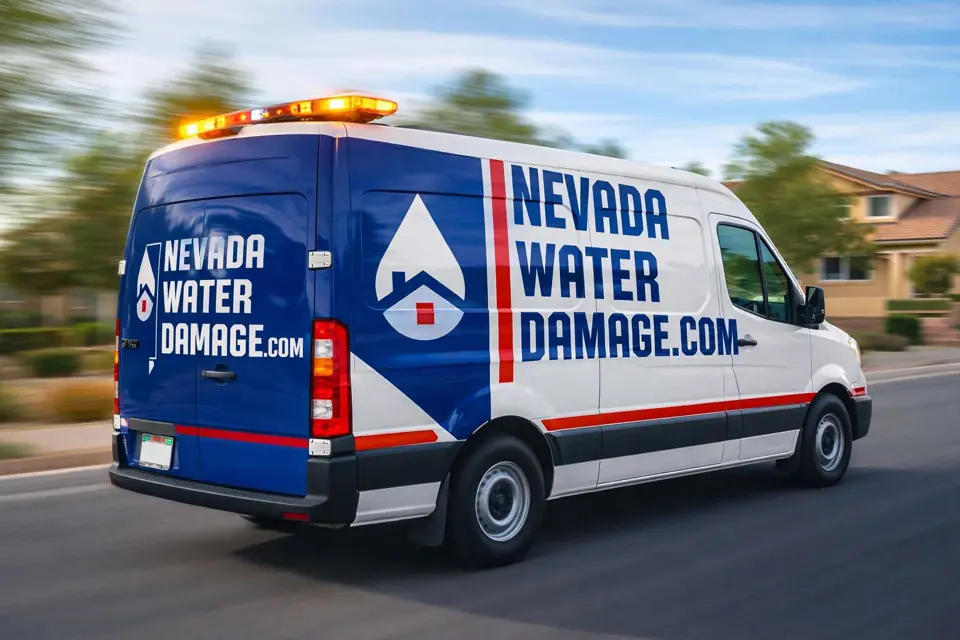
Water Damage
Structural Drying Services in Las Vegas
Structural drying is the process of removing moisture from a building's framing, subfloor, drywall and slab after a water loss, using air movers, dehumidifiers and daily moisture readings until the structure returns to a normal, dry condition. It is the step between water extraction and rebuild, and skipping it or cutting it short is one of the main reasons mold shows up weeks after a leak.
Nevada Water Damage
What we do
Pulling standing water off a floor is only the first part of drying out a water-damaged home. Water that soaked into drywall, framing, subfloor or a concrete slab has to be removed from those materials too, or it stays trapped behind new paint and flooring, waiting to grow mold.
Structural drying uses air movers to circulate air across wet surfaces, low-grain-refrigerant dehumidifiers to pull moisture out of the air, and moisture meters or thermal imaging to track progress day by day. Nevada Water Damage does not call a job finished until the readings say the structure is actually dry, not just that it looks dry.

Signs
Signs you need help
- Drywall or baseboards that still feel cool or damp to the touch
- A musty smell that lingers after visible water is gone
- Warping or buckling in flooring near where the water was
- Paint that bubbles or peels days after a leak
- A moisture meter reading above normal on walls or subfloor
- Condensation or a foggy feeling in a room that was affected by water
- Visible mold spots starting to appear along baseboards or in corners
Right now
What to do first
- Do not close up walls, install flooring or repaint until drying is confirmed complete
- Keep the affected area ventilated if it is safe to do so
- Move furniture and belongings away from wet walls and floors
- Avoid running central AC in a way that spreads humid air from the wet area to the rest of the house
- Photograph the damage before any equipment is set up
- Call for a free inspection so drying starts before mold has a chance to establish
Las Vegas
Why drying has to be done right in a Las Vegas home
Extreme summer heat in the Las Vegas valley can actually work against a drying job if it is not managed correctly, because heat alone does not equal dry. A hot attic or a sun-baked wall can feel warm while still holding moisture deep inside the material, which is why we rely on moisture meters and thermal imaging instead of guesswork.
Stucco exteriors, tile roofs and slab-on-grade foundations, which describe most homes in the valley, all trap moisture differently than wood-frame construction elsewhere. A wet slab dries from the surface first, which can mask moisture still sitting deeper in the concrete, and stucco can hold water against the wall assembly behind it far longer than the outside appears wet.
Most structural drying takes about three to five days, confirmed by daily moisture readings, though a Category 3 loss, a slab leak that sat for a while, or a job during monsoon season with high outdoor humidity can take longer.
Process
How does structural drying work?
Done to IICRC standards, with documented moisture readings.
Moisture mapping
We use moisture meters and thermal imaging to map exactly which materials are wet, including areas that look dry to the eye, before setting up equipment.
Equipment placement
Air movers are positioned to create airflow across wet surfaces and LGR dehumidifiers are sized to the affected space to pull moisture out of the air efficiently.
Containment where needed
If the water category calls for it, we contain the drying area to keep the rest of the home free of dust, odor or contaminated air during the process.
Daily monitoring
Technicians return daily to take moisture readings, adjust equipment placement and confirm the structure is drying on schedule.
Antimicrobial application
Affected framing and subfloor are treated with an antimicrobial product to control mold growth while drying continues.
Verification
Drying is not called complete until moisture readings in the affected materials match the readings in an unaffected, comparable area of the home.
Handoff to rebuild
Once the structure is verified dry, we document the final readings for your records and insurer, and the space is ready for repair or rebuild.
Insurance
Does insurance cover structural drying?
Structural drying is typically covered under a homeowners policy when it follows a covered water loss, such as a burst pipe or appliance failure, since insurers generally want the structure properly dried to avoid a larger mold claim later. What is not usually covered is drying tied to a loss that was gradual or due to lack of maintenance. We keep daily moisture logs and photos throughout the drying process, which becomes part of the documentation we send directly to your insurance company.
Cost
What decides the cost of structural drying in Las Vegas?
- How many rooms or how much square footage was affected
- Whether the water reached framing, subfloor or a concrete slab, not just surface flooring
- The water category, since Category 2 or 3 water needs more extensive drying and treatment
- How many days of equipment and monitoring the structure needs to reach a dry reading
- Whether containment is needed to protect the rest of the home during drying
- How long the water sat before drying started
Every job is different. The inspection is free and we walk you through the scope before work starts.
Prevention
How to keep it from happening again
- Address any water event quickly rather than waiting to see if it dries on its own
- Never assume a surface that looks dry means the structure underneath is dry
- Keep humidity in check during monsoon season by running the AC and checking that condensate lines are clear
- Have a moisture inspection done after any leak, even a small one, in an older home
- Do not rush to close up walls or lay new flooring after a leak without a moisture check
- Ask about daily moisture logs any time a drying company works in your home
Questions
Straight answers
How long does structural drying actually take?
Most structural drying takes about three to five days, confirmed with daily moisture readings, though the exact timeline depends on how much water was involved, what materials were affected, and how long the water sat before drying started.
How do you know when something is actually dry, not just dry to the touch?
We use moisture meters and thermal imaging to check materials like drywall, framing and slab, and compare the readings to an unaffected area of the same home. A wall can feel dry on the surface while still holding moisture deeper inside.
Do I have to leave the house while drying equipment runs?
Not usually. Air movers and dehumidifiers are noisy but most homeowners stay in the house during drying, unless the affected area needs to be contained for air quality reasons.
What happens if drying is stopped too early?
Trapped moisture behind new paint, flooring or drywall creates exactly the conditions mold needs. The EPA notes mold can begin growing within 24 to 48 hours of a water intrusion, so cutting drying short is one of the most common causes of a later mold problem.
Will my electric bill go up while the equipment runs?
Air movers and dehumidifiers do use power, and most jobs run them for a few days. We size the equipment to the space so drying finishes as quickly as the materials allow.
Do you dry concrete slabs, not just walls and floors?
Yes. Slab-on-grade construction is common across the Las Vegas valley, and a wet slab has to be dried and verified just like framing or drywall, since it can hold moisture well below the surface.
Can drying be covered by insurance?
Structural drying following a covered water loss, like a burst pipe or appliance failure, is typically covered. We document the drying process daily and bill your insurance company directly.
Blog
Related guides from our blog
Related
Related services
Sources: U.S. Census Bureau, ACS 2023 5-year · U.S. EPA · Las Vegas Valley Water District · IICRC S500 / S520 · National Weather Service Las Vegas
24 hours, 7 days
Water where it should not be?
Call now - we tell you what to do while we are on the way, and send the crew. Or leave your details and we call you in minutes.